
Before You Use AI Music: A Brand’s Guide to Copyright in 2026
Using Suno, Udio or another AI music generator in a campaign? Check what you can actually license before the track becomes part of your brand.

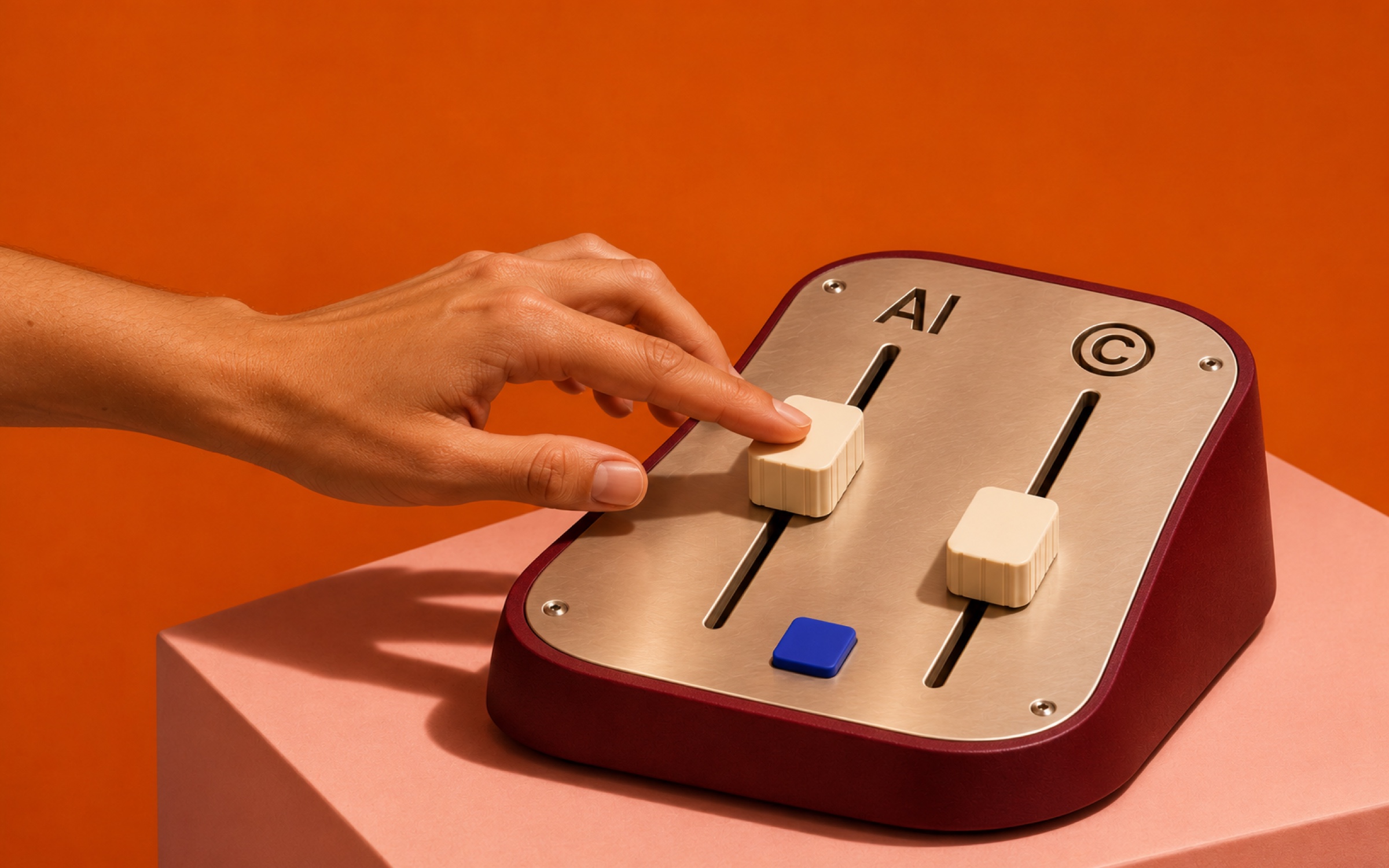
Why we put human music behind our AI tools
In conversations with brands, we keep hearing about teams using Suno, Udio and similar tools. The appeal is easy to understand: describe a mood, get a song, try it against the picture. The question that needs equal attention is what happens when that experiment becomes a paid campaign.
We built AINSOF's AI tools around a catalog of music written, performed and produced by human composers. Search and editing work with existing recordings and their credits. That keeps our music workflow connected to identifiable writers, publishing and master rights, and gives editors a way to move from a creative choice to the paperwork needed for release. Our licensing FAQ explains the catalog and coverage.
A commercial use permission is only the starting point
A generator may permit commercial use under a particular plan. That tells you something about your agreement with the provider. It does not, by itself, establish that every element in the output is free of third party rights, or that the provider will pay your legal costs if a dispute arises.
For example, Suno's own copyright guidance distinguishes its free plan from its paid plans and says that material made under either may not qualify for copyright protection. Read the terms that applied when you made the song, then check the permissions your actual campaign requires.
AI can make a track. Who clears the rights?
Were the recordings and compositions licensed?
What does the provider actually promise?
What rights cover your campaign?
These questions apply to human music too. The advantage of a documented catalog is that there is a rights record and a licensing contact to answer them.
What the Suno and Udio cases show
The 2024 complaint against Suno alleged unauthorized copying of sound recordings for training. A complaint states allegations, not a court's findings. It also concerns the provider's conduct; it does not establish that every song made by a user infringes copyright.
The landscape has also changed since those filings. Warner Music Group announced a partnership and settlement with Suno in November 2025. Universal Music Group announced a settlement and licensed platform agreements with Udio in October 2025. Those announcements matter, but they are not a substitute for checking the rights and terms of the output you intend to use.
There has been a court ruling too. On July 31, 2026, Munich Regional Court I largely upheld GEMA's claims against Suno concerning six compositions and specified models and outputs. The published judgment addresses training, model storage and reproduction of protected musical elements. The European Commission's IP Helpdesk reported in August that the judgment was not yet final. It should not be read as a worldwide ruling on every AI song.
For a brand, the practical lesson is to investigate the specific track and permission. A dispute about training and a claim against the use of a particular output are separate questions. If an output incorporates protected material without authorization, using it in a campaign can create its own exposure, depending on the facts and applicable law.
A song can be ready for the edit before its rights are ready for the campaign.
Ownership does not automatically mean copyright or exclusivity
The U.S. Copyright Office's guidance says protection depends on sufficient human authorship. A prompt alone is not enough. Human writing, creative arrangements and modifications can qualify, and using AI as an assistive tool does not automatically remove protection.
This matters if you want a distinctive piece of music to become a lasting brand asset. Permission to monetize a file, copyright protection and an exclusive license are different things. Ask which you are getting. A standard catalog license also does not automatically give your brand exclusivity; that needs a separate agreement.
Five checks before a campaign goes live
Consider a hypothetical agency making a social campaign for a client. The first cut uses a generated song; the approved media plan later adds paid ads and television. The original download permission needs to be checked against that final plan. Use these questions before delivery:
- Record where the music came from. Keep the source, creation or download date, plan, applicable terms and any permissions for uploaded audio or voices.
- Confirm both sides of the music rights. Establish who authorizes the composition and the recording, and investigate recognizable third party material.
- Match the license to the release. Specify the client, channels, paid advertising, territories, term and any television, cinema, app or game use.
- Read the claims provisions. Check warranties, exclusions, any indemnity, liability limits and who handles a claim. Do not assume a subscription includes legal defense.
- Keep the paperwork with the production. Save the license and credits. For broadcast delivery, check the cue sheet requirements. A cue sheet documents music use; it does not grant a license.
Human music. Traceable rights. A clear license.
AINSOF's catalog is built around human composers. We control the master and publishing rights in our music, so you can license those rights through one point of contact. Our public FAQ explains the rights records behind the catalog, including writers, publishers and registered splits.
Our aim is full clearance of the music rights required for your agreed use. In practice, that means matching the license to the production, documenting the permission and keeping the credits accessible. Coverage follows the chosen license: television and broadcast, trailers and cinema, and apps and games require Enterprise coverage under our current terms. Performance royalties are not included in the license, and applicable broadcaster or venue obligations remain separate.
Our standard composer agreements include commitments to human authorship. When a new submission raises questions, we can run audio analysis to help flag possible AI generated material as part of a human review. A detection result is a screening signal, not proof of authorship or clearance. The rights documentation remains essential.
AI in the tools. People behind the music.
Human composers.
Identifiable writers and publishers.
Documented recording rights.
Your production.
Your media, territories and term.
The coverage you agree with us.
Find the track. Shape the edit. Retrieve the credits.
You can still use AI to move faster. Our tools help you search by the scene you are cutting, shape a track to the edit and retrieve credits. The music and its rights record remain connected throughout that workflow.
Bring the brief. Get the music and the rights.
Tell us what you are making, where it will run and who it is for. Find the right human composed track and confirm the license before release.
Find music for your campaignEditorial source check: November 11, 2026. This article explains practical licensing questions and selected legal developments. The applicable agreement and jurisdiction determine your rights and obligations; obtain advice for a specific dispute.
Related posts:
Brief ChatGPT like a music supervisor
How to go from a scene description to music you can actually use: cut to length, placed on your video, with the cue sheet, without leaving the chat.
21 October 2026 · 5 min readRead more
AINSOF in Claude: what MCP is and how to connect it
Claude can talk about music all day. Connect AINSOF and it can also find the cue, play it, cut it to your length and hand you the cue sheet. What MCP means, how to set it up, and what to ask first.
21 October 2026 · 8 min readRead more
How we built an AI agent that cuts music like an editor
Ads, pre-rolls, bumpers and logo stings all need music at an exact length, and a short version has to sound as if the song was written that long. How we built an AI agent that makes our cuts, how we trained it on our own editor's corrections, and how you can ask for the same kind of cut in ChatGPT or Claude.
21 October 2026 · 7 min readRead more